Edwin Didier
Meriaux

Double PhD student at McGill University and Université Paris-Saclay (CentraleSupélec), supervised by Professor Gregory Dudek and Dr. Antonio Loria. Researching multi-agent systems, autonomous robotics, and distributed perception in constrained environments.
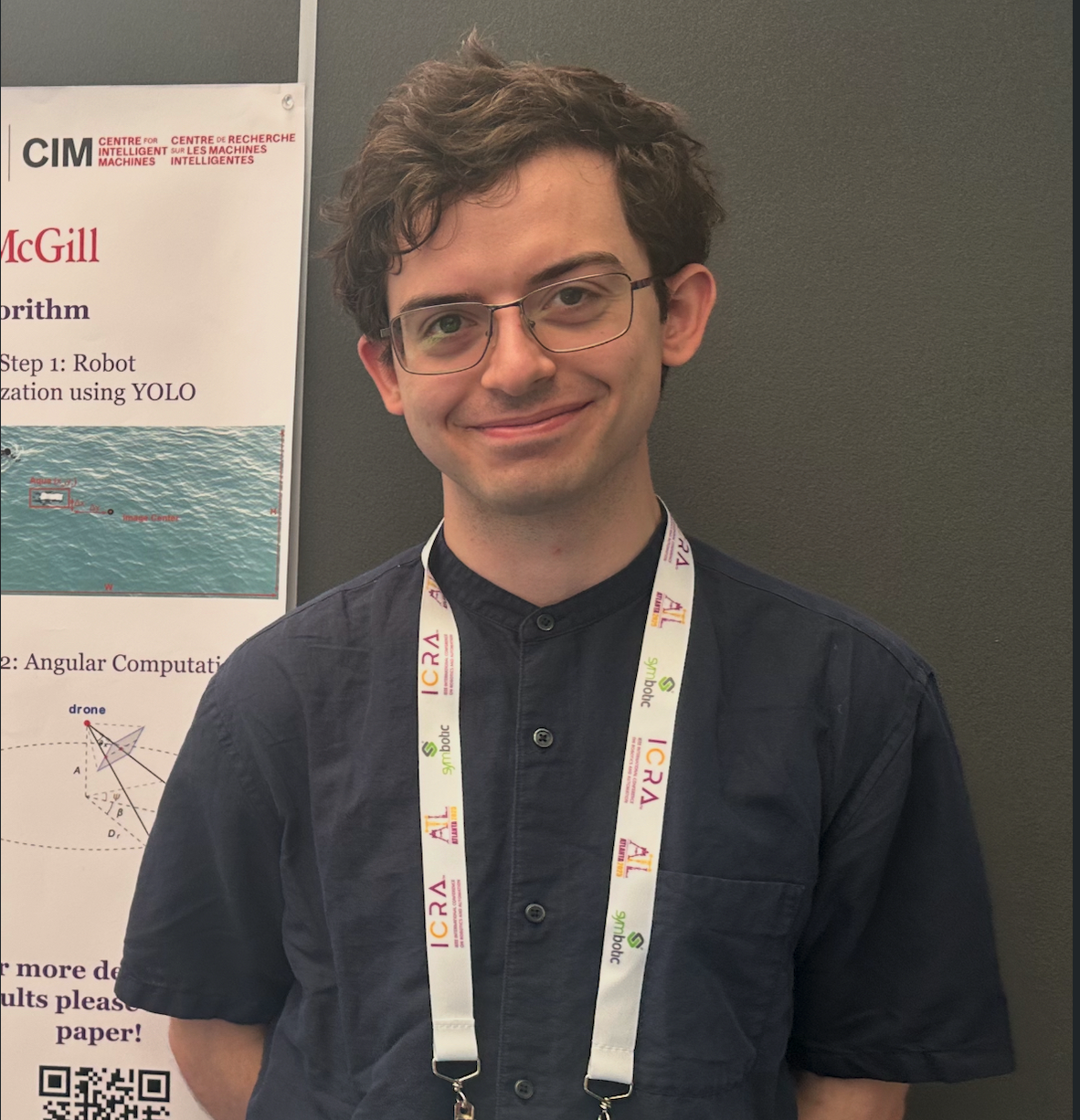
Edwin Meriaux

My research sits at the intersection of AI, robotics, and communication theory. I develop algorithms for multi-agent systems that enable teams of mobile ground and aerial robots to create ad-hoc communication networks in uncertain, partially observable environments. This work draws on computational geometry, game theory, reinforcement learning, and large language models to solve real-world coordination problems.

Before starting my PhD, I completed a Master's in Computer Engineering (thesis track) at McGill under Professor Aditya Mahajan, focusing on robust optimization for path coverage under adversarial uncertainty. My undergraduate work at UMass Lowell spanned five research labs, where I developed drone evaluation methodologies for the US Army, built assistive navigation devices, and founded the university's Drone Club.

Multi-Agent Systems

Cooperative planning and control for heterogeneous robot teams

Autonomous Robotics

Aerial and ground vehicles in GPS-denied and subterranean settings

Communication-Aware Planning

Ad-hoc network deployment under connectivity constraints

Distributed Perception

Cooperative sensing and estimation across constrained environments

Partially Observable Cooperative Guard Art Gallery Problem

Sep 2024 – Present
PhD Research · McGill & Paris-Saclay · Advisors: G. Dudek, A. Loria

Proposed the Partially Observable Cooperative Guard Art Gallery Problem (POCGAGP) to model the deployment of mobile ad-hoc communication networks in constrained environments. Developed centralized (CADENCE) and decentralized (DADENCE) algorithms for network deployment. The POCGAGP, provides a mathematical formulation for network deployments in constrained environments as an expansion on the Art Gallery Problem and the Cooperative Guard Art Gallery Problem. Ongoing work looks at extending the POCGAGP into continuous spaces with more relaxed spatial geometries and developing improvmeents to the underlying solutions with a goal to utilize both classical optimization and learning-based methods to solve the problem.

MANET Computational Geometry Multi-Agent Systems MARL
POCGAGP diagram

Aerial GNSS Estimation with Multi-Drone Systems

Sep 2024 – Sep 2025
McGill · Mobile Robotics Lab

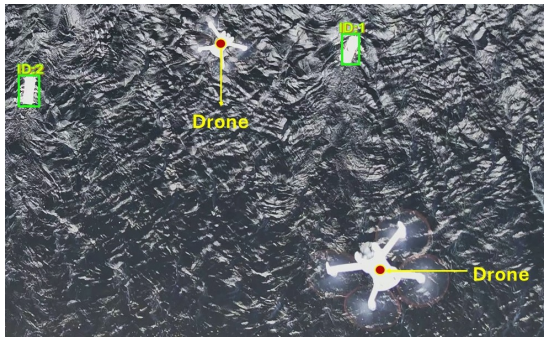
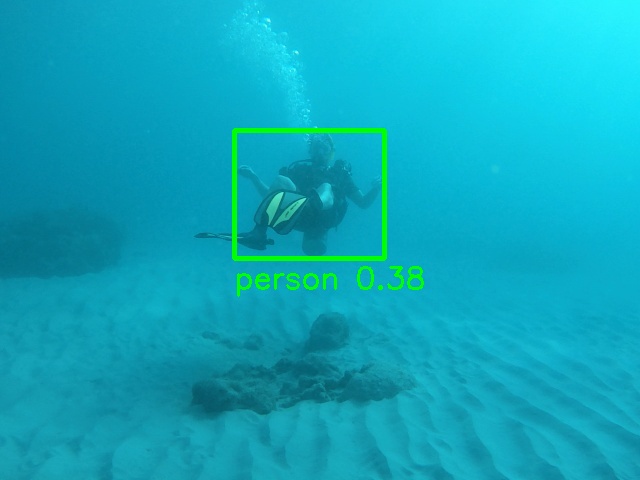
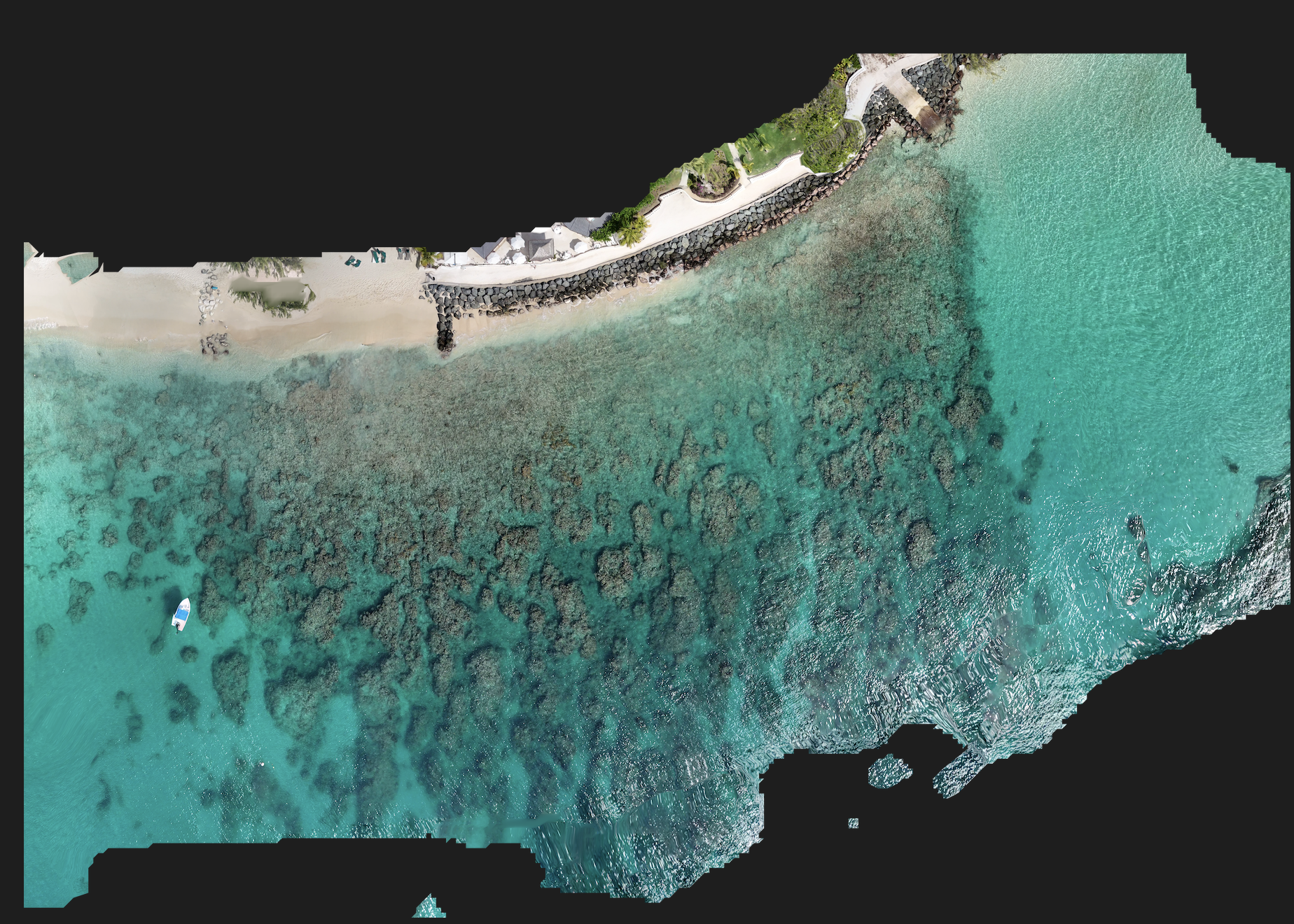
Developed a cooperative multi-agent aerial–marine system using multiple drones to estimate GNSS positions of submerged and surface robots. Designed multi-drone tracking, cross-drone ID alignment, and multi-view estimation methods for robust localization. Applied triangulation and Extended Kalman Filtering for real-time multi-robot localization, validated through field deployments.

Multi-Robot Localization Marine Robotics Extended Kalman Filter
GNSS field deployment left GNSS field deployment right

Robust Shortest Path with Adversarial Uncertainty

Sep 2022 – Aug 2024
Master's Thesis · McGill · Advisor: A. Mahajan

Developed robust path coverage strategies for multi-agent search and rescue using Nash Equilibria, graph theory, and game theory. Modeled environments as Markov Decision Processes with stochastic controls, extending to Partially Observable MDPs (POMDPs) through belief-state construction to capture world uncertainty.

Robust Optimization Game Theory POMDP Graph Theory

Couzin Swarming Robustness to Packet Loss

Summer 2022 – Fall 2025
UMass Lowell & McGill · Advisor: J. Weitzen

Investigated communication robustness in decentralized swarms using the Couzin model under packet loss and degraded conditions. Analyzed how communication failures affect swarm cohesion, collision avoidance, and collective behavior. Developed distributed strategies including packet redundancy and inter-agent passing to improve stability under limited connectivity.

Swarm Robotics Communication Packet Loss

DECISIVE — Subterranean sUAS Evaluation

Summer 2020 – Fall 2022
UMass Lowell · EXALABS & NERVE · US Army Research Lab

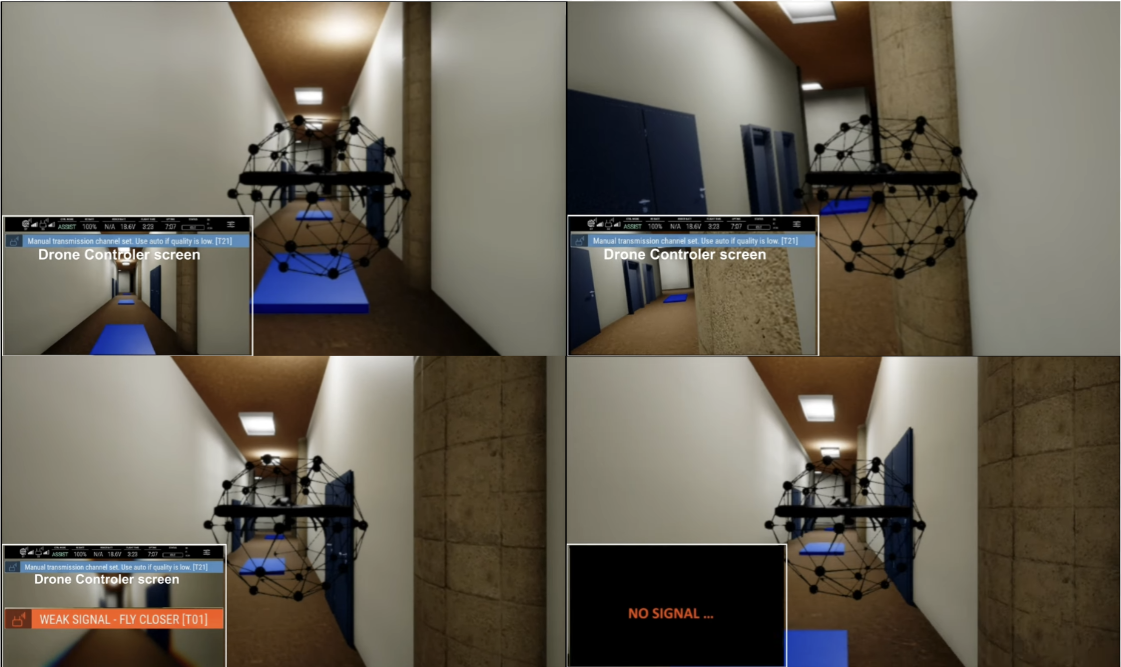
Developed test methodologies to evaluate drones in GPS-denied underground environments for the US Army. Concentrated on navigation, collision tolerance, communication robustness, and human-robot trust. Work included both real-world testing of 8 commercial sUAS platforms and simulation in Microsoft AirSim. Over 230 tests were conducted and results published in multiple venues.

sUAS Evaluation AirSim GPS-Denied US Army
Real-world hallway test environment for trust testing

NAVLENZ — Assistive Navigation for the Visually Impaired

Fall 2018 – Spring 2023
UMass Lowell · S&H Fusion Group · Capstone Project

Co-developed a wearable device to aid visually impaired users in navigation using depth-mapping (Intel D435i) and directional audio feedback. Evolved from an Arduino-powered lidar prototype to a full Rust-based processing pipeline. Won $4,000 from the UML Difference Maker competition and presented at RID2023 in Montreal.

Depth Sensing Spatial Audio Rust Accessibility

Full list on Google Scholar · 48 citations

  1. 01
  2. 02

    Robust Shortest Path with Incremental Information Revelation

    E. Meriaux and A. Mahajan
    European Control Conference (ECC), IEEE, 2025
  3. 03

    Stable Multi-Drone GNSS Tracking System for Marine Robots

    S. Wen, E. Meriaux, et al.
    arXiv preprint, 2025
  4. 04

    Robustness of Couzin Swarming to Packet Loss and Methods to Improve Robotic Swarm Communication

    E. Meriaux and J. Weitzen
    IEEE COMCAS, 2024
  5. 05

    How Does Trust in Simulations of Drone Failures Compare with Reality?

    E. Meriaux, et al.
    IEEE ICARA, 2024
  6. 06

    Simulation of the Effect of Correlated Packet Loss for sUAS Platforms in NLOS Indoor Environments

    E. Meriaux, J. Weitzen, and A. Norton
    Drones 7(7), 2023
  7. 07
  8. 08

    DECISIVE Test Methods Handbook v1.1

    A. Norton, E. Meriaux, et al.
    US Army / arXiv, 2022
  9. 09
  10. 10

    DECISIVE Benchmarking Data Report: sUAS Performance Results from Phase I

    A. Norton, E. Meriaux, et al.
    US Army / arXiv, 2023
PhD, Computer Science
McGill University & Université Paris-Saclay (CentraleSupélec) · Sep 2024 – Present
GPA: 4.0
Dual PhD under Professor Gregory Dudek (McGill) and Dr. Antonio Loria (Paris-Saclay / CNRS). Topic: AI-based Control of Autonomous Multi-Agent Robotic Vehicles with Spatial and Algorithmic Constraints.
MS, Computer Engineering (Thesis Track)
McGill University · Sep 2022 – Aug 2024
GPA: 3.8
Thesis: Robust Optimization for Reinforcement Learning. Research at the Centre for Intelligent Machines (CIM) and Mila, supervised by Professor Aditya Mahajan.
BS, Computer Engineering
University of Massachusetts Lowell · Sep 2018 – May 2022
GPA: 3.96 · Summa Cum Laude · Commonwealth Honors
Worked across 5 research labs (EXALABS, NERVE, S&H Fusion, CMINDS, and with Prof. Weitzen). Founded the UMass Lowell Drone Club. Honors thesis on optimizing depth-map processing via C++ multithreading.

ECC 2025 — European Control Conference

"Robust Shortest Path with Incremental Information Revelation." 2025.

ICRA 2025 — Robots in the Wild Workshop

Presented at the Robots in the Wild workshop at ICRA 2025.

Hcode 2026

Presented at Hcode 2026.

DECISIVE Capstone — US Army Presentation

Presented full Navigation and Collision Tolerance results to the US Army and associated parties. Fall 2022.

IEEE HST Conference

"Evaluation of Navigation and Trajectory-following Capabilities of Small Unmanned Aerial Systems." Fall 2022.

MIT URTC Conference

"Performance Comparison of Machine Learning Methods in DDoS Attack Detection in Smart Grids." Fall 2022.

NAVLENZ — RID2023, Montreal

Presented rebuilt Rust-based NAVLENZ system at the RID2023 innovation competition. Spring 2023.

UML Difference Maker Competition

Won Sutherland Innovative Technology Solution Award for NAVLENZ. Spring 2021.